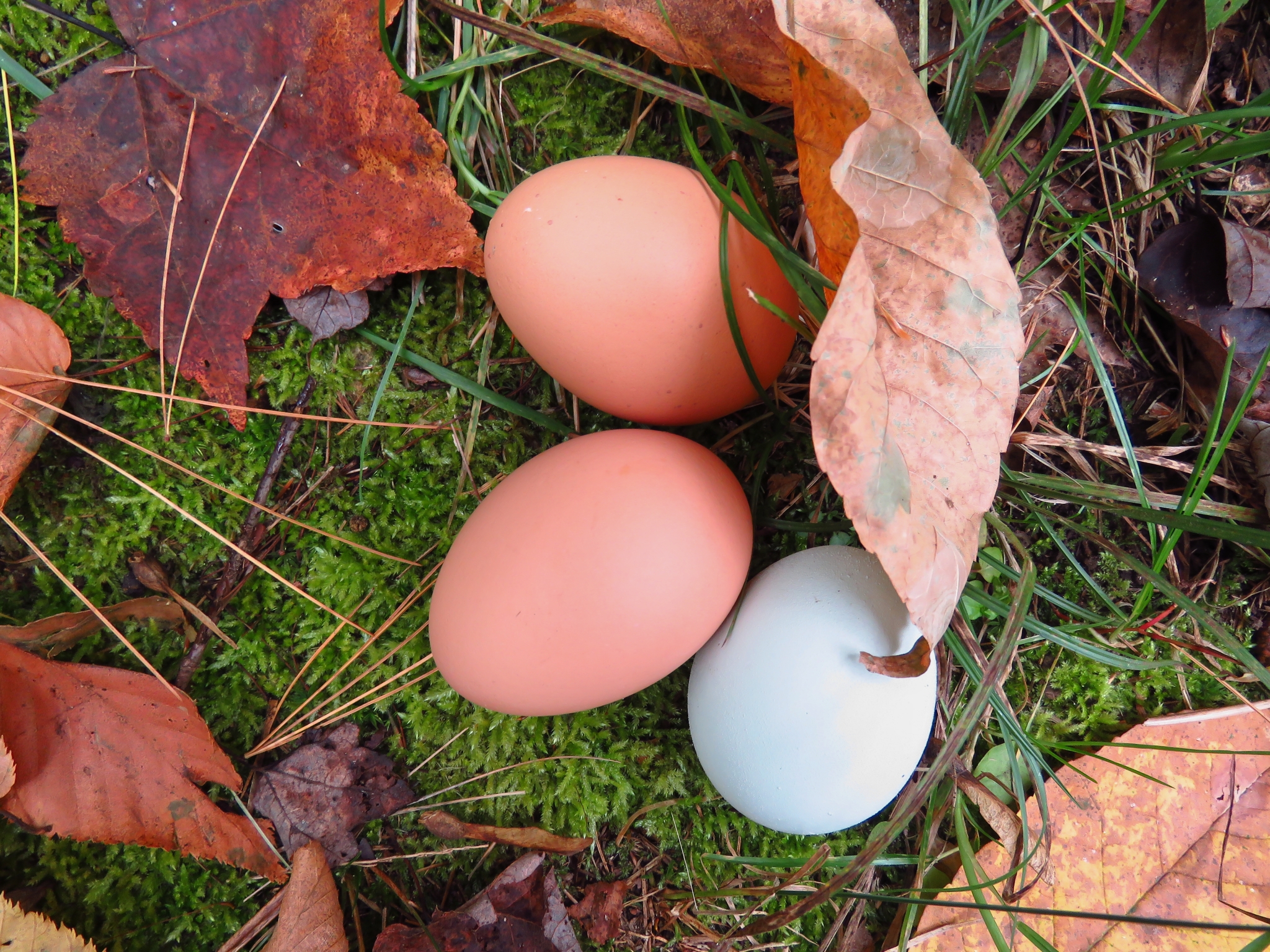
Friday, November 17, 2023

the good news is


The good news is: I don't have to worry about mice in the truck anymore!


The less-good news is: I no longer have a truck.

I took the 2004 Highlander in for an inspection sticker last month, expecting to hear that I'd need new wipers or a parking brake cable or some such, and hoping it wouldn't be anything very costly. Instead, the mechanic who does the inspections came back in about 3 minutes, handed me the keys, and said, "You can't drive that." Apparently there was major deterioration beneath the rear half of the truck, and it wasn't safe to drive at all, even the 4 miles to get home.

Perhaps suspecting that I had every intention of driving home, the mechanic disappeared into the back and the owner, who I've known for many years, came out, offered me a ride home, and said that if I left the truck with him for a few days he would find time to put it on the lift and see what could be done. He knows I go to great lengths to keep my vehicles running as long as possible. Whenever I have to shop for a vehicle - a process I consider about as enjoyable as choosing health insurance - I always book a pre-purchase inspection at this garage. There is no point in buying something this fellow doesn't want to maintain.

Well, when I picked up the phone a few days late, I heard, "Start shopping. The front end is as bad as the back, and even if I could find parts, which is unlikely, the work would be prohibitively expensive."

Welcome to Massachusetts, land of salted roads in Winter, and rust all year round.

My default reaction when something breaks beyond repair, is to first step back and consider whether I really need a replacement at all. How much do I really need it? Can I get by without it? Sometimes "doing without" seems like the better choice, sometimes not; when the dishwasher broke, I didn't last a week.

For the past few weeks I've been alternating between an unenthusiastic online search for a replacement vehicle, and pondering whether I can get by without owning a vehicle. It's not a simple question.

I bought the Highlander for Piper in 2017. Here we are at the pond, about to embark upon one of our sketching hikes. Good times.

 
~~~~~

Sunday, November 12, 2023

recent markmaking


Roman glass


Owly eye


Pebble of the Day (twitter @GongFuPoet)


from one of vanGogh's pollarded trees


from (another) Harry Burton photograph
taken in Tutankhamun's tomb


Tiny ball of string.
Does everyone still have one of these in a drawer?


Rutabaga


Red maple in late stage of life.
I relate.

~~~~~

Wednesday, November 1, 2023

Acer

2 April 2012 - 26 October 2023

Baby Acer tackling Goat Mountain...
...and reaching the summit.


Acer the Maple Man and Betula the Birch Boy,
with mum LeShodu, Day 5...

...and a couple of years later.


Second birthday pictures:


Acer at 4 years, 2016:

Always the first to shed: 10 Feb 2016

Nearly nine years old, Feb 2021:

Acer and Betula enjoying bittersweet in the Pocket Paddock,
30 June 2013...

...and 1st October 2023.

Acer's last three months have been filled with extra meals, lots of  treats, a wide variety of fallen leaves to browse, and many hours of companionship and special attention every single day.
Some of those days were sunny.


Good boy, Acer. It's been a pleasure.
~~~~~

Sunday, October 15, 2023

scrambling


My method of cooking scrambled eggs and omelettes has recently changed, and it's such an improvement that every time I make scrambled eggs I think, "I should put this on the blog." Maybe everyone else already knows this tip, as it's apparently been around for many years, but it was new to me. So here goes.

If you like your fried eggs cooked through, but not dry or browned or crisp in any way - then this method is for you. And me. It's definitely the method for me.

The secret is adding a bit of starch to the eggs. I've experimented with the amount of starch - I'm using potato starch - and have settled on a much smaller amount than the (possibly original) version I've seen online.

Potato starch, salt, and pepper stirred into milk.
Eggs on deck.

Here's what I'm doing: 
for each egg, I mix 1/4 teaspoon potato starch with 1 Tablespoon milk in a small bowl, add seasonings, then beat in the eggs. I melt about 2 teaspoons of butter in a frying pan, then add the egg mixture. The amount of butter probably depends on the size of your pan; mine are the small blue Pyrex with detachable handles, made in the 1930s and 40s. A perfect size for two or three scrambled eggs. A bigger pan is much easier for omelettes.


Apart from the potato starch, everything is traditional scrambling: low/medium heat (on my gas stove, 3.5 on a dial of 10 is just right, and 4 is too hot), moving the eggs frequently as soon as they begin cooking, and taking the pan off the heat just before the eggs are completely done. Really, the only difference is that tiny amount of starch!

But the results have been consistently excellent. Best scrambled eggs I've ever had. Isn't it great when a tiny, simple change improves something you've been doing for years?

Did you know about this little piece of magic? If not, and if you like eggs that are consistently soft and neither runny nor dry, I think it's worth a try.

~~~~~